
Russian speech development sessions for bilingual children in Singapore
Is your child's Russian falling behind, hard to understand or mixed with English? Iana Belskaya, a Russian-trained teacher-logopedist with over 20 years in education, works with bilingual children in person and helps them speak Russian clearly and confidently through play.
In person at Sunshine Plaza, 91 Bencoolen St · home visits across Singapore · one-to-one sessions
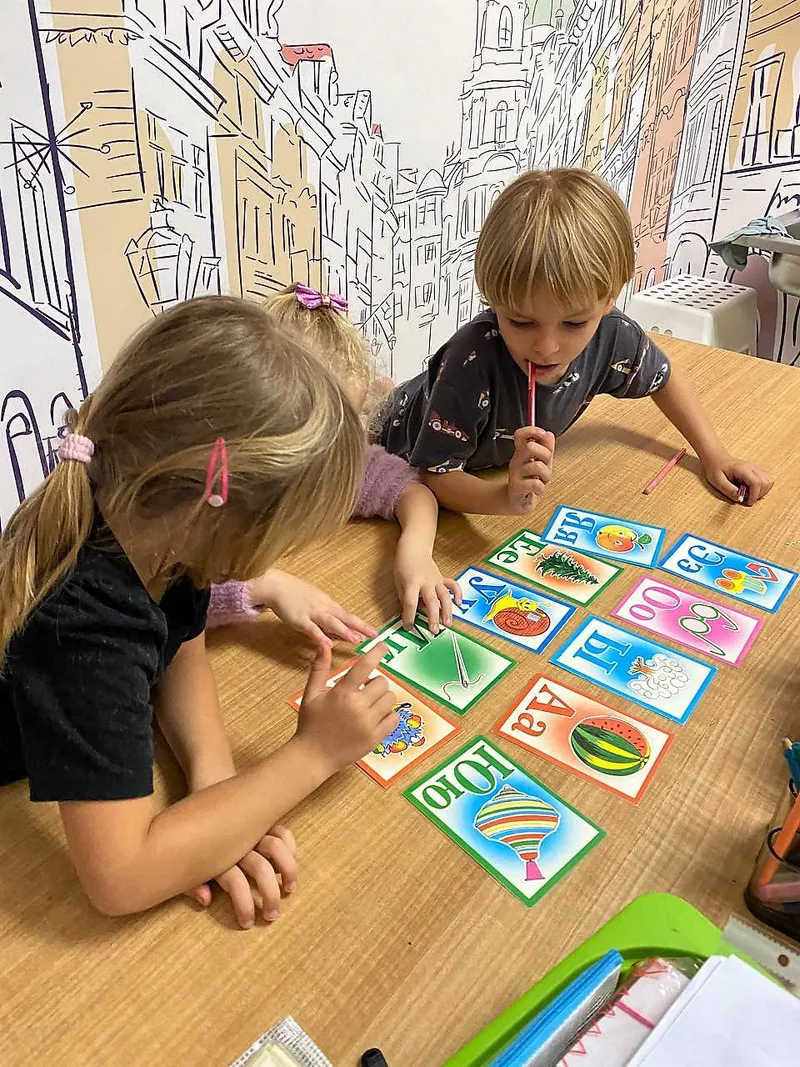
When to see a logopedist
Parents often put off a visit, hoping it will “sort itself out” or that it's all down to bilingualism. A consultation is worthwhile if you notice that:
- your child substitutes, drops or distorts sounds — e.g. “lyba” instead of “ryba”, “sapka” instead of “shapka”;
- by age 4–5 their speech is still hard for other people to understand;
- few words, short phrases, struggles to retell a cartoon or describe their day;
- mixes up word endings and prepositions, builds Russian sentences on an English pattern;
- understands Russian but refuses to speak it;
- school is coming up, but letters and reading are a struggle;
- difficulties with reading or writing have appeared at school, with the same mistakes repeating.
One meeting helps you understand what's normal for their age and what needs work.
Why it matters that the logopedist works with your child in person
In logopedics, having the specialist right next to the child makes a real difference.
Nothing gets missed
Tongue and lip position, breathing, muscle tone, small inaccuracies in a sound — much of this is lost on a screen, but in person the logopedist notices it straight away.
Hands-on help
When working on sounds, the logopedist demonstrates correct articulation and uses probes and tactile cues. That's impossible online.
Movement and speech together
Logorhythmics, finger exercises and neuro-exercises work when the child is moving and the logopedist is right there to correct them.
The child stays engaged
Young children find it hard to focus on a screen; a live session with toys and learning materials keeps them interested to the end.
That's why our main format at KIT is in-person sessions at our centre on Bencoolen St. If it's more convenient, the logopedist can come to your home anywhere in Singapore — message us on WhatsApp for details.
Bilingualism doesn't cause speech difficulties
Knowing two languages does not in itself cause speech problems. Mixing languages in one sentence, a smaller vocabulary in each language taken separately, a temporary “silent period” after a change of environment — these are all typical stages of bilingual development.
But bilingualism has one catch: if sound production or grammar is affected, it can show up in both languages, and parents and teachers often put the difficulties down to bilingualism. A logopedist who speaks Russian and understands how bilingual speech develops can tell one from the other and plan sessions for your particular child.
What we work on
Sound production
Establishing and automating sounds: hushing and hissing sounds, R and L.
Phonemic awareness
Your child learns to hear and tell sounds apart — essential for reading and writing.
Vocabulary and grammar
We expand vocabulary and practise agreeing words correctly and building sentences.
Connected speech
Retelling, describing pictures, dialogue — your child learns to express their thoughts in Russian.
School readiness and literacy
Sound analysis, getting to know letters, first steps in reading.
Preventing reading and writing difficulties
Working on typical mistakes made by primary-school children.
Children with special educational needs
Sessions adapted to the child's developmental profile, in close contact with parents and other specialists.
How sessions work
- Step 1
First meeting
We get to know your child in person through play, assess their speech development and answer your questions. You leave with recommendations and a clear sense of whether regular sessions are needed.
- Step 2
Individual plan
We set goals and an approximate session frequency.
- Step 3
Regular sessions
One-to-one, 30 or 45 minutes, 1–2 times a week. Articulation and finger exercises, logorhythmics, attention and memory games — depending on the goals. We use a neuropsychological approach: movement and speech develop together.
- Step 4
Home practice and parent updates
Short 5–10 minute daily exercises and regular feedback: what's already working and what we're focusing on next.
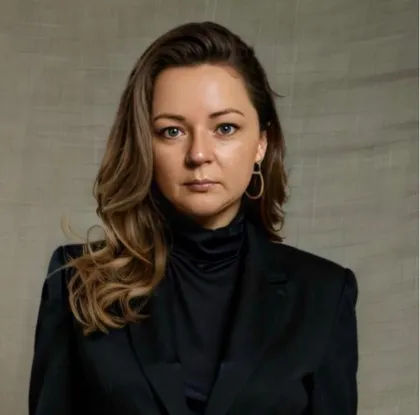
Your logopedist — Iana Belskaya
Teacher-logopedist, Russian language teacher
Iana helps Russian-speaking children in Singapore speak clearly, fluently and with pleasure, even when English is what they mostly hear around them. Her strength is combining logopedic training with experience teaching Russian: children don't just work on sounds, they also learn to read, write and tell stories in Russian.
Over 20 years in education, including 15 years working with bilingual children.
Education
- Peoples' Friendship University of Russia (RUDN) — Institute of Retraining and Professional Development, 2010–2012. Professional retraining in Logopedics, qualified as a teacher-logopedist. Curriculum included logopedics, logopsychology, special education and psychology, psycho-educational assessment, foundations of neuropsychology and neurophysiology, anatomy of the hearing and speech organs, logorhythmics and voice training.
- ACC Institute of Human Services — Singapore. Specialist Diploma in Teaching and Supporting Children with Special Needs.
- Russian State University of Tourism and Service — Moscow, 2002–2008. Higher education degree in Social Work. Curriculum included pedagogy, psychology, and social work with families and children.
- Montessori education — professional retraining programme (2 years).
- Russian as a Foreign Language — Lomonosov Moscow State University (MSU).
- Teacher of Russian Language and Literature — Professional development centre under the Russian Ministry of Education.
- Qualifi Level 5 Diploma in Teaching English as a Foreign Language — The TEFL Academy, UK, 2026.
Professional development
- “Preparing a child with speech difficulties for school” and “The logopedic primer: teaching a child to read and write” — Logoped-Profi professional training centre, 2019.
What Iana works on
- Speech development in bilingual children
- Sound production and phonemic awareness
- Vocabulary, grammar and connected speech
- School readiness and early literacy
- Preventing reading and writing difficulties
- Sessions for children with special educational needs
- Russian for IGCSE and IB
Please note
Logopedist sessions at KIT are educational and developmental. They are not a medical service and do not replace a consultation with a doctor or a speech-language therapist registered in Singapore (AHPC). If during the first meeting we see signs that call for a medical assessment (for example, hearing or swallowing issues, or neurological concerns), we will recommend seeing a paediatrician or the relevant specialist.
Frequently asked questions
From what age can my child start?
We work with children from 2.5 years. If your 2–3-year-old has almost no words, don't put off a consultation; for general speech development our NeuroStart programme is also a good fit.
Can we do sessions online?
Yes, but we recommend in person: the logopedist needs to see and hear your child up close, demonstrate articulation and help hands-on when needed — especially when establishing sounds. Online works better for reinforcing skills and connected-speech work with older children.
Can the logopedist come to our home?
Yes, home visits across Singapore are possible. Message us on WhatsApp for details and availability.
Why a Russian-speaking logopedist if my child studies in English?
The logopedist works on Russian speech: Russian sounds, grammar and vocabulary. Many skills — phonemic awareness, connected speech, attention to sounds — carry over to the second language too. If the difficulties show up mainly in English, you may need an English-speaking specialist; we'll help point you in the right direction.
Is it true that bilingual children start talking later?
Bilingualism on its own does not cause speech delay. If your child is noticeably behind their peers, the cause is most likely not the two languages — and that's a good reason to get a consultation.
How long is a session and how often?
A one-to-one session lasts 30 or 45 minutes, usually 1–2 times a week. The logopedist will suggest an exact plan after the first meeting.
How many sessions will we need?
It depends on the goal. Establishing a single sound usually takes less time than working on connected speech or school readiness. After the first meeting the logopedist will give you a realistic timeframe.
Do we need to practise at home?
Yes — short daily exercises noticeably speed up progress. We give clear tasks and show you how to do them.
Is this a medical service?
No. The logopedist assesses speech development and plans sessions. Medical conclusions are given by doctors and registered healthcare professionals.
Book your first meeting
Tell us about your child on WhatsApp: their age, which languages are spoken at home and what concerns you. We'll reply, suggest a convenient time and explain how the first meeting works — at our centre or in your home.
Where: 91 Bencoolen St, #08-05, Sunshine Plaza (near Bencoolen and Bras Basah MRT stations)